

For someone with a new knee or hip replacement, finding reliable exercise guidance and appropriate community programs can be daunting. Where are these programs? Are they safe? What do instructors know about joint replacement?
To help answer these questions, Rhonda Tam, a research trainee with the Centre for Aging SMART and a physiotherapist at Kids Physio Group in Richmond and Hartwell Therapy and Wellness in Vancouver, outlines the centre’s research and offers guidance to support British Columbians post-surgery.
What Does Post-Surgery Care Look Like in BC?
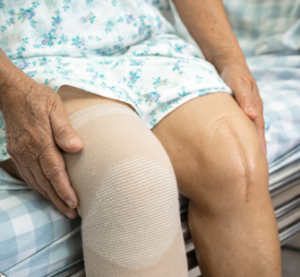 More than 21,000 British Columbians with advanced osteoarthritis receive a hip or knee replacement each year.
Following surgery, there is limited funding for a short course of physiotherapy in a private clinic or outpatient department. During this time, our research shows that they receive limited and inconsistent targeted advice to return to regular physical activity.
Other studies have found that even two years after surgery, individuals are less active than their peers.
Community-based exercise programs are a great option for these individuals to support their long-term physical recovery, fitness, movement confidence, and social connections. But there is a shortage of these programs in BC.
Our Project & What Our Research Found
What community-based joint replacement exercise programs exist in BC? How effective and safe are these programs? What makes for a good program designed for people before and after hip and knee replacement surgery?
We conducted a three-part project to answer these questions.
Initially, we analyzed the literature from around the world and found limited research evaluating community-based, fitness-instructor-led joint replacement programs.
Secondly, we did an Environmental Scan and found 10 recreational joint replacement exercise programs in 8 communities across BC, with none in the Fraser Valley or southern Vancouver Island. The programs varied in structure (fixed schedule versus ongoing), cost, referral requirement, timing, length, and format (land versus pool).
The final activity brought together researchers, fitness instructors, people with lived experience, and physiotherapists to discuss the findings and recommendations. The 9 recommendations and related activities target community centres, recreation coordinators, fitness instructors, clinicians, and people living with arthritis or joint replacement.
This project generated several recommendations for community programs, fitness instructors, and people living with arthritis or joint replacements.
Key Recommendations
Community & Recreation Centres:
Use various strategies to increase awareness and access to your joint replacement programs
This includes asking local physiotherapists to refer patients to your program. Participate in local health fairs, offer program
open houses, post flyers in coffee shops, libraries, or senior centres, and don’t underestimate the power of word of mouth and social media!
Reduce barriers to participation by simplifying the registration process, keeping fees low, and demonstrating that your facility and instructors support inclusion, diversity, equity and accessibility through your culturally sensitive and inclusive programs. This might also include offering program information in various languages and encouraging in-class support from a care aide or family member.
Program Coordinators & Fitness Professionals:
Design and deliver programs specific to the needs of individuals undergoing joint replacement surgery.
Consider the delivery format, time of day, exercise content, choice of exercise equipment, and modifications for participants with movement restrictions.
Explore virtual exercise options to help those who experience geographical barriers.
Develop a standardized approach to onboarding fitness instructors to ensure they have the knowledge, skills, and experience necessary to offer safe and effective programs. Several e-Learning courses are available (see Appendix D in the full report).
Conduct regular program evaluations to identify gaps, track participant safety, and inform quality improvement efforts.
Keep track of the demographic (who is attending), process (attendance rates), outcome (function, quality of life), and patient experience data. These can help you reflect on and identify areas for improvement. Sharing clinical data with participants can encourage engagement in their ongoing recovery.
Participants:
Talk to your physiotherapist and healthcare team about joint replacement or arthritis-friendly programs in your local community. Find a checklist of questions to ask here.
Look for programs that offer progressive, individualized exercise including cardiovascular fitness, strength, flexibility, and balance activities.
Check if you need a referral to attend and whether you can join the program before AND after your joint replacement to maintain your physical activity throughout your surgical journey.
We hope that these recommendations will help community centres, programmers, and fitness leaders to better support active living in individuals along the joint replacement continuum. Community-based exercise programs should be a part of the joint replacement care pathway.
If you have ideas on how to build stronger partnerships with hospitals, physiotherapists, recreation centres, and fitness professionals – please reach out to us!
Our full report and list of programs can be found here
An interview with Dr. Marie Westby and Arthritis Consumer Experts through their Arthritis at Home series is available here
About the Author
 Rhonda Tam, BKin, MPT, is a research trainee with the Centre for Aging SMART and a physiotherapist at Kids Physio Group in Richmond and Hartwell Therapy and Wellness in Vancouver. Rhonda is passionate about living an active lifestyle and empowering her clients to do the same. Her pediatric practice focuses on treating children with physical, neurological, and developmental conditions, and she works with adults with mainly musculoskeletal injuries in her adult private practice.