
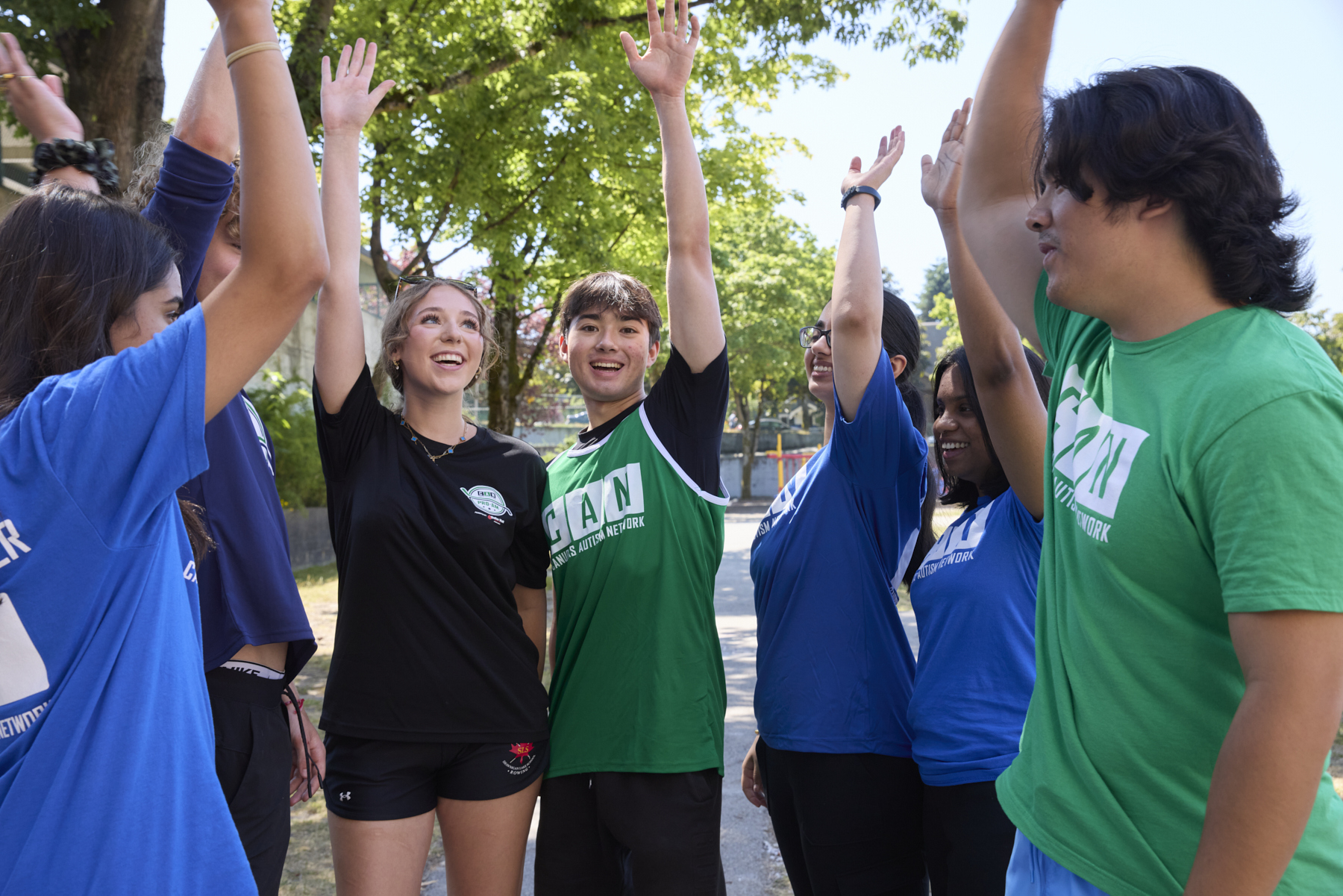
To a child arriving at camp for the first time, a busy recreation centre can feel like a lot.
There might be whistles, echoing voices, quick instructions, new faces, or a schedule that changes before anyone has time to settle in. For some children, that energy is exciting. But for others, including many autistic and neurodivergent children, it can be overwhelming enough to decide whether they feel able to participate at all.
Those moments are becoming harder to treat as exceptions. Across British Columbia, approximately one in every 30 children is diagnosed with autism, and one in five is considered neurodivergent. That means staff are being asked to welcome participants with a wider range of needs, often in programs where leaders are managing large groups, fast transitions, and limited support.
For many children, camp is a place to try new activities, make friends, and build confidence outside the structure of school. For neurodivergent campers, that opportunity can be especially meaningful when the environment is supportive.
Welcoming & Engaging Spaces for All Participants
Having practical solutions in a camp setting can make a world of difference. It may mean frontloading information to make the day more predictable. In customer service, it may mean calmly asking how to help and guiding someone to a quieter area. In recreation and sport, it may mean adjusting expectations so participants can stay engaged.
That is where Canucks Autism Network’s (CAN) training courses are designed to help.
“The biggest thing for me when I started at Canucks Autism, I was visiting programs and looking around and really honestly thinking to myself that a lot of these kids could be well supported in their own communities at the recreation centre that’s close to their home,” said Stephanie Jull, Vice President of Programs and Training at CAN.
That idea has shaped CAN’s training work for the past several years. What began with community workshops for groups like swimming instructors and day camp leaders has grown into a broader training arm, including the launch of the CAN Learning Hub last year. The platform moved about 10 years of community-tested content into three online courses for camp leaders, sport and recreation staff, and customer-service workers, now offered on BCRPA’s e-Learning platform.
CAN’s learning hub helps programmers make activities more accessible to a wider audience, communicate instructions more clearly, support sensory needs, and proactively respond when someone is having difficulty.
“We don’t do a lot of theory,” Jull explained. “We don’t need recreation staff to be able to diagnose children. In fact, we don’t want them to do that. What we want is for them to see a diverse group and apply strategies universally that will help more children be engaged. That’s it at the end of the day.”
Demand for supportive training has continued to grow, with 40 trainings booked for day camp leaders this June alone. “Supporting kids in day camp is a very needed topic in the community,” said Jull.
The camp leaders’ course topics include sensory considerations, personal care, overnight camp, water safety, and supporting campers through difficulty or crisis. A need for predictability is essential in camps where the day may move quickly from one activity to the next.
One of the simplest tools CAN encourages is a visual schedule.
“A visual schedule could be as simple as taking a piece of paper and writing what we’re going to do today,” Jull said. “It doesn’t matter what age you’re working with, if you attend a master’s swimming practice, they have a whiteboard at the edge of the pool deck,” she said.
Knowing the right way to communicate is key. Some campers may use augmentative devices to speak, while others who usually communicate verbally may lose that ability when overwhelmed. Noticing early signs of escalation is a vital learning outcome within the module.
What Inclusive Customer Service Looks Like
The same approach carries into customer-service settings, where inclusion often begins with the first person a visitor meets.
For staff working at a front desk, recreation facility, public venue, or local attraction, the customer-service training module focuses on simple responses that can make a difficult moment more manageable. Staff learn how small actions can offer better support, like using a calm tone of voice and taking the lead from a caregiver when one is present.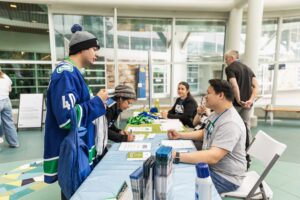
Those steps may sound basic, but they address a common challenge in public spaces: when someone is overwhelmed, the response around them can either add pressure or regulate it.
That is especially relevant in recreation because facilities are not strictly program spaces. They are also public-facing community spaces, where families register for programs, ask questions, navigate bustling lobbies, and decide whether they feel comfortable returning.
Accessibility can depend on how prepared staff are in those moments to respond with patience and clarity. Jull said that kind of confidence is central to CAN’s training.
“It’s about having the confidence that I’ll bring the right attitude to this, that I’ll ask good questions, that I’ll pay attention and observe what’s working and what’s not working for my group, and confidence that I have in a new toolbox of things that are really easy for me to do,” she said.
The customer-service course looks at shorter but equally important interactions: the moments when someone enters a space, asks for help, or becomes overwhelmed.
CAN’s training prioritizes making autistic and neurodivergent voices be heard, seen, and valued. That feedback loop is strengthened by neurodivergent facilitators who bring lived experience directly into the training environment.
“We have many neurodivergent learning facilitators who are in the community teaching these workshops and are able to constantly give feedback around content and what’s working, what’s not working, [and] what we might be missing,” said Jull.
Recreation staff are often balancing skill development, safety, group management and belonging at the same time. A small program design choice — whether to run a long scrimmage, post a visual cue, offer a countdown before transition, or give participants two clear choices — can shape whether a child feels successful enough to keep participating. The priority is safety, calm and support.
Essential Training
After years of delivering community training, Jull has noticed one major shift: organizations are increasingly recognizing the need for practical learning. “Nobody disputes that it should be done,” she said. “Everybody wants it, sees the needs, sees the importance.”
For a camp leader, that might mean using a visual schedule before the day begins. For a coach, it might mean shortening instructions. For customer-service staff, it might mean recognizing when a space is overwhelming and responding with patience.
Small changes can decide whether someone feels comfortable enough to return. Because when a child can join the game, or when a participant feels supported enough to try again, inclusion becomes something people can feel instead of just hear.
To learn more about CAN’s Learning Hub and the tools available to support more inclusive recreation spaces, visit BCRPA’s online e-Learning offerings. Through these modules, recreation professionals and community organizations can continue building the confidence, awareness, and practical skills needed to help more participants feel welcome.
About the Author
 Jeffrey Kennett is drawn to the energy of sport and the stories that surround it. Whether he is playing pickup basketball at the community centre, watching hockey, or spending time outdoors in British Columbia, Jeffrey is interested in the ways recreation brings people and communities together. With a passion for amplifying local voices and crafting meaningful stories, Jeffrey aims to highlight the people, places, and experiences that make sport and recreation so valuable. You can find more of his work on LinkedIn.